Measles Elimination Status: Canada Outbreak and USMLE Review
A study in the BMJ examined the measles outbreak that contributed to Canada losing its measles elimination status in November 2025. The outbreak was concentrated in historically undervaccinated communities with close social ties. Those ties extended across Canada, the United States, Mexico, and other countries, so the virus moved easily across borders.
What happened
According to the summary of the BMJ study reported by Medical Xpress, the outbreak that fed into Canada's loss of elimination status did not spread evenly through the population. It clustered in communities with historically low vaccination coverage. These communities are also tightly connected socially, and the connections are not limited to one country. They run through Canada, the US, Mexico, and other countries.
The authors' message is that a national immunization rate can look reassuring while local pockets of susceptibility sustain transmission. When those pockets are linked across borders, the virus can keep circulating even where overall coverage is high. This is how local gaps in immunity can undermine national control of an infection.
The source material available to us is only a short summary. It does not give case counts, the exact study design, the time frame, or the specific communities involved, so we do not report them here. For those details, read the full paper in the BMJ.
Why it matters: measles elimination status explained
"Elimination" is a technical public health term. In general, a country is considered to have eliminated measles when there has been no endemic (continuous, sustained) transmission for at least 12 months in the presence of good surveillance. Imported cases can still occur. Loss of status means that a chain of transmission persisted long enough to be considered re-established.
Measles is the classic stress test of an immunization program. It is among the most contagious human pathogens, with a basic reproduction number (R0) usually quoted at 12–18. Because of this, the herd immunity threshold is very high, roughly 95% with two doses of vaccine. Even a small drop below that level in a cluster can allow sustained spread.
The Canadian story shows a few principles that appear again and again in epidemiology questions:
- Averages hide clusters. National or regional coverage can mask communities with much lower coverage.
- Social networks matter more than geography. Transmission follows contacts, not borders.
- Elimination is fragile. It has to be maintained continuously through coverage and surveillance.
What to know for the USMLE: measles (rubeola) high-yield facts
- Pathogen: Measles virus is an enveloped, single-stranded, negative-sense RNA virus in the family Paramyxoviridae, genus Morbillivirus. Its hemagglutinin (H) protein binds host receptors (SLAM/CD150 on immune cells, nectin-4 on epithelium). Its fusion (F) protein causes cell fusion and syncytia.
- Transmission: Respiratory droplets and airborne spread. The virus can remain infectious in the air of a room for a period after an infected person has left. It is contagious from before the rash appears until several days after.
- Clinical course: After an incubation period of roughly 10–14 days, the prodrome begins. It consists of high fever and the three Cs: cough, coryza, conjunctivitis.
- Koplik spots: These are small white-blue spots on an erythematous buccal mucosa, pathognomonic and appearing before the rash.
- Rash: A maculopapular rash begins on the face and hairline and spreads cephalocaudally, with lesions that can become confluent.
- Pathology clue: Multinucleated Warthin-Finkeldey giant cells may be seen in lymphoid tissue.
- Complications:
- Otitis media is the most common complication.
- Pneumonia is the most common cause of measles-related death in children (viral, or bacterial superinfection).
- Encephalitis can be acute or post-infectious.
- Subacute sclerosing panencephalitis (SSPE) is a rare, late, fatal complication occurring years after infection.
- Transient immune suppression after infection increases susceptibility to other infections.
- Vitamin A: Measles can deplete vitamin A, and supplementation is part of standard management in children in guideline-based care. Expect this as a "next best step" in some questions.
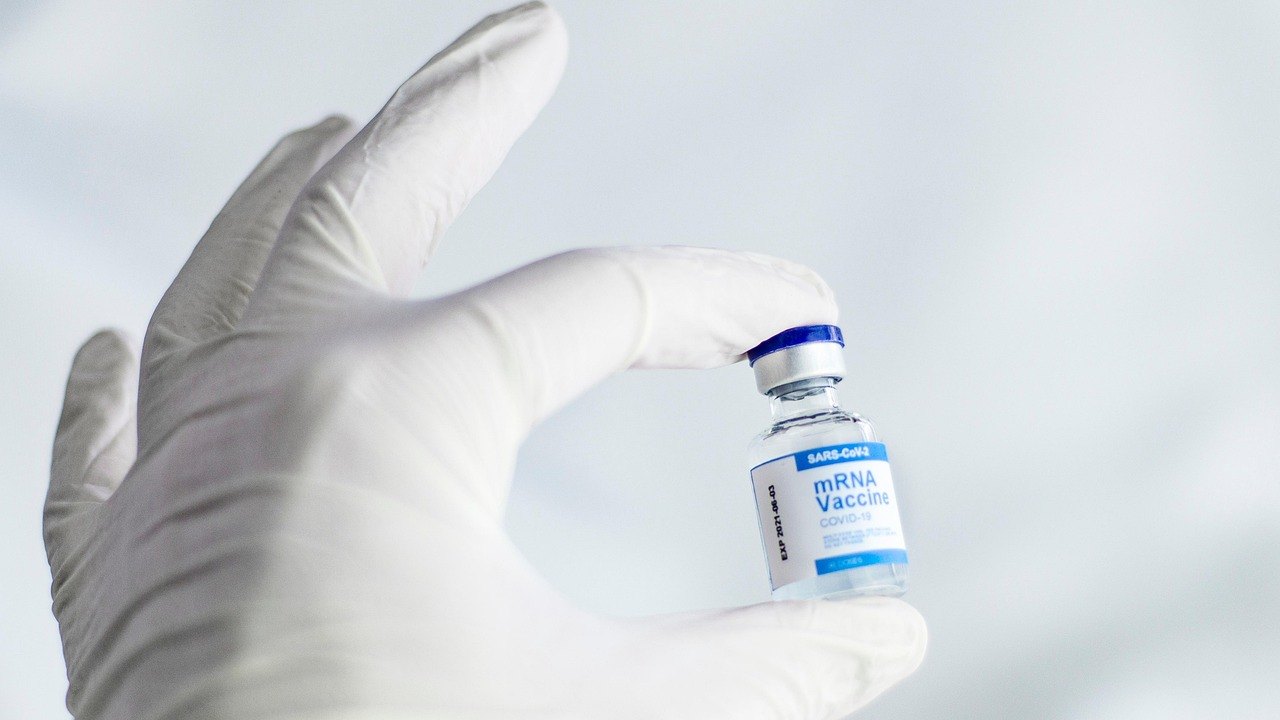
- Vaccine: MMR is a live attenuated vaccine, given in two doses in childhood (typically at 12–15 months and 4–6 years). It is contraindicated in pregnancy and in severe immunocompromise.
- Post-exposure prophylaxis (exam concept): MMR vaccine within 72 hours of exposure, or immunoglobulin within about 6 days for those who cannot receive the vaccine (for example, infants, pregnant women, and severely immunocompromised people).
- Biostatistics link: Know the formula for the herd immunity threshold, 1 − 1/R0. The higher the R0, the higher the required coverage. Also understand why clustering of unvaccinated people lowers effective protection beyond what overall coverage suggests.
- Differential: Rubella (milder, posterior auricular lymphadenopathy), roseola, scarlet fever, Kawasaki disease (prolonged fever, conjunctivitis, but no Koplik spots), and parvovirus B19.

Limitations
- We only have a brief summary. The details a critical reader needs (sample, methods, data sources, time frame, number of cases) are not available in the source material, so we cannot assess the study's strength.
- Outbreak analyses are usually observational. They describe patterns of spread and cannot by themselves prove what would have happened under different vaccination policies.
- "Historically undervaccinated" is a group-level description. It does not tell us about the reasons behind low coverage in any given community, and it should not be used to stereotype any group.
- The summary does not say how much each country contributed to transmission, or how the cross-border links were measured.
- For the exam, one news item is not a source of testable facts. Use it as a case study of concepts you already need to know.
FAQ
Why did Canada lose measles elimination status?
Per the BMJ study summary, the outbreak that contributed to the loss of status in November 2025 spread in historically undervaccinated, closely connected communities. The status depends on whether transmission is judged to have been sustained, which is why persistent spread matters more than isolated imported cases.
What is the herd immunity threshold for measles?
Because measles R0 is about 12–18, the threshold is approximately 92–95% or higher. This is higher than for most vaccine-preventable diseases. On the USMLE, calculate it as 1 − 1/R0.
How do you recognize measles on a USMLE vignette?
Look for an unvaccinated child with high fever, cough, coryza, conjunctivitis, and white spots on the buccal mucosa (Koplik spots), followed by a rash that spreads from the head downward. Questions often ask about the virus family (Paramyxoviridae), complications (pneumonia, encephalitis, SSPE), or prevention (MMR, a live vaccine).
Key takeaways
- A BMJ study links Canada's loss of measles elimination status in November 2025 to an outbreak in historically undervaccinated, socially connected communities spanning Canada, the US, Mexico, and other countries.
- Local gaps in immunity can sustain transmission and undermine national control, even when overall coverage looks high. This is why measles needs a herd immunity threshold of roughly 95%.
- For Step 1 and Step 2 CK, remember Paramyxoviridae, Koplik spots, the 3 Cs, cephalocaudal rash, complications (otitis media, pneumonia, encephalitis, SSPE), and live attenuated MMR with its contraindications.
Prepared by the project team from the source material. Not medical advice.