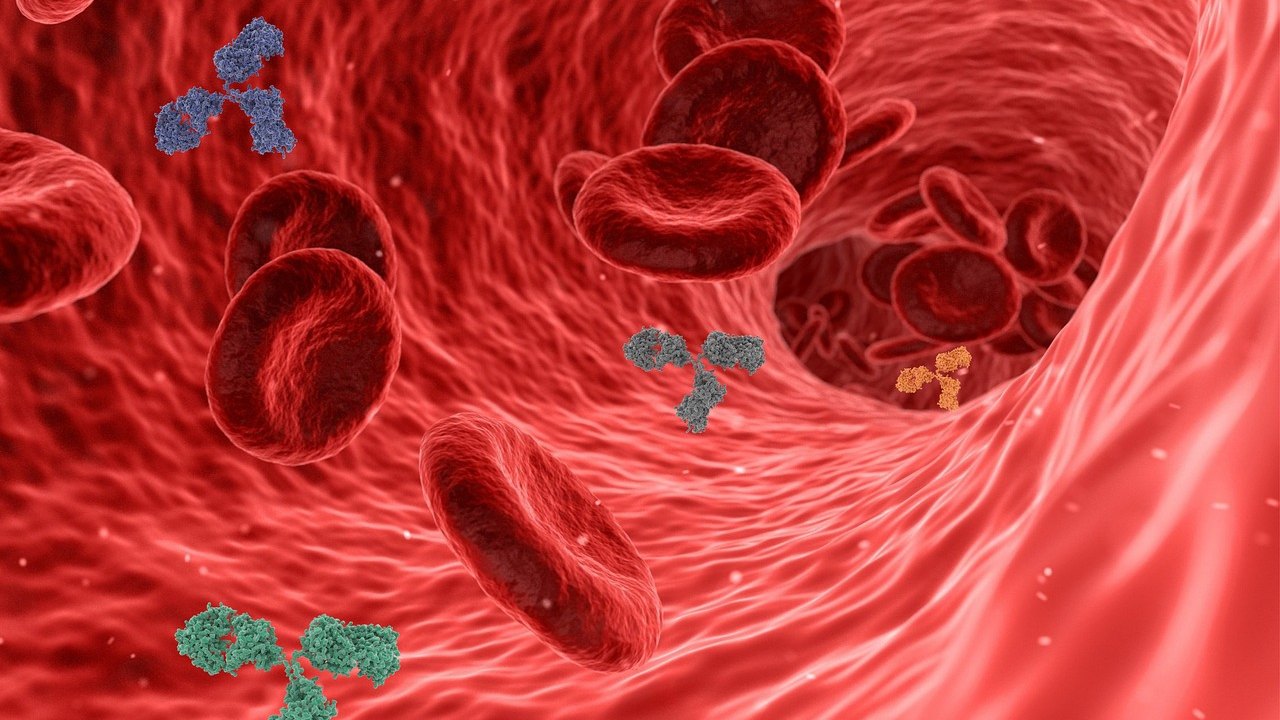
T Cell Memory and Tissue Stiffness: USMLE Immunology Review
Researchers at McGill University report that T cells can detect how stiff their surrounding tissue is, and that this physical information helps determine whether they become long-lived tissue-resident memory T cells. The work, published in Nature Immunology, challenges the idea that these cells are shaped mainly by chemical signals. It is a basic-science finding, and clinical use is a long way off.
What happened
Tissue-resident memory T cells (TRM) are specialized immune cells that stay in tissues after an infection and respond quickly if the same pathogen returns. Until now, researchers largely believed their development was guided mainly by chemical signals such as cytokines.
The McGill team, led by Judith Mandl, a professor in the Department of Physiology, tested whether physical surroundings also matter. They collected immune cells from humans and mice and placed them in specially designed collagen gels that mimicked tissues of different stiffness.
The pattern was clear: as the gels became stiffer, T cells were increasingly likely to acquire characteristics associated with tissue-resident memory cells. The authors suggest that adjusting to the stronger mechanical forces inside tissues may be important for these cells to survive over time.
The team now wants to identify the specific molecular sensor that lets T cells detect their physical environment and convert mechanical force into changes in cell behavior. The work involved several McGill departments and centers, plus collaborators in the Netherlands and the United States, and was funded by agencies including the Human Frontier Science Program, CIHR and the U.S. NIH.
Why it matters
Immunology is usually taught as a story of chemistry: antigen, costimulation, cytokines. This study adds a physical dimension. The mechanical properties of the tissue appear to act as an active signal shaping T cell fate.
The authors point to possible future relevance in two areas. The first is diseases where the immune system attacks healthy tissue, including autoimmune disorders, allergies and transplant rejection. The second is cancer immunotherapy. Mandl noted that tumors are often dense and physically hard for immune cells to penetrate, so understanding how T cells adapt to such environments could help in designing immunotherapies that reach tumors better. These are stated hopes, not demonstrated results.
What to know for the USMLE
The study itself will not appear on an exam, but it sits on top of high-yield T cell concepts:
- T cell development: precursors mature in the thymus. Positive selection (cortex) tests recognition of self-MHC; negative selection (medulla, aided by AIRE) removes strongly self-reactive cells.
- Naive T cell activation requires signal 1 (TCR binding peptide–MHC), signal 2 (costimulation, e.g., CD28 binding B7), and cytokines. Without costimulation, the cell becomes anergic.
- MHC restriction: CD8+ cytotoxic T cells recognize peptide on MHC class I; CD4+ helper T cells recognize MHC class II.
- Effector vs. memory fate: after an infection, most effector cells die in the contraction phase (apoptosis). A minority persist as memory T cells, which respond faster and more strongly on re-exposure.
- Memory subsets: central memory cells (circulate through lymphoid organs, express CCR7 and CD62L), effector memory cells (circulate through blood and tissues), and tissue-resident memory cells (remain in peripheral tissues such as skin, lung and gut, providing local first-line defense). The memory-subset distinctions are commonly taught in more detail than Step 1 requires, but the concept of immunological memory is high-yield.
- Vaccination exploits immunological memory. Live-attenuated vaccines generally induce strong cellular and humoral responses; conjugate vaccines recruit T cell help for B cell responses to polysaccharide antigens, producing memory, whereas pure polysaccharide vaccines are T-independent and produce weaker memory.
- Cytokines: IL-2 supports T cell proliferation; IL-7 and IL-15 are classically associated with memory T cell survival and homeostasis.
- Clinical correlates: transplant rejection (T cell-mediated in acute cellular rejection), type IV hypersensitivity (delayed-type, e.g., contact dermatitis, tuberculin test, mediated by sensitized T cells and memory), and checkpoint inhibitors (anti-PD-1, anti-CTLA-4) that restore T cell activity against tumors.
- Mechanotransduction concept: cells sense stiffness through surface receptors such as integrins linked to the cytoskeleton, converting force into biochemical signals. This is general cell biology. The study's authors have not yet identified the specific sensor in T cells, so do not assume it is integrins.

Limitations
- Basic, early-stage research. The authors call it a fundamental finding. Nothing here has been tested as a treatment.
- Artificial model. The experiments used T cells from humans and mice in collagen gels that mimic tissue stiffness. A gel is a simplified version of real tissue, which also has chemical signals, other cell types and blood flow.
- Mechanism unknown. The molecular sensor has not been identified, so how stiffness is converted into a fate decision remains unexplained.
- Association with a phenotype. According to the source, stiffer gels made cells more likely to acquire characteristics associated with tissue-resident memory. Acquiring those characteristics in a dish is not the same as proving durable protection in a living organism.
- Applications are speculative. Links to autoimmunity, allergy, transplantation and cancer are possibilities the researchers describe, not findings.
FAQ
What are tissue-resident memory T cells?
They are memory T cells that remain in tissues after an infection instead of circulating widely. They respond quickly if the same pathogen returns to that site.
Does this study change what I need to know for Step 1?
Not directly. Core concepts such as T cell activation, MHC restriction, memory formation and vaccination remain unchanged. The study is a good example of how the field keeps refining the understanding of what controls memory cell fate.
Can tissue stiffness be used to treat cancer or autoimmune disease now?
No. The work is early laboratory research. The authors say that understanding T cell responses to physical conditions could eventually open new possibilities, but no therapy has been developed or tested from this finding.
Key takeaways
- McGill researchers found that T cells in human and mouse samples respond to tissue stiffness, and stiffer collagen gels made tissue-resident memory features more likely.
- This suggests that physical forces, not only chemical signals, help shape immunological memory. The sensor responsible is still unknown.
- For the USMLE, focus on the fundamentals: T cell activation signals, MHC restriction, effector versus memory fate, and how vaccines rely on memory.
Prepared by the project team from the source material. Not medical advice.