Hi everyone! I'm Dr. Asiia Vinograd — physician, cardiologist, PhD, and an IMG currently on my own USMLE journey. In this article we're covering all gram-positive bacteria — exactly the way you need to know it for Step 1. High-yield, no fluff.
How to Think About Gram-Positive Bacteria
When you do a Gram stain, gram-positive bacteria turn purple. That's because they have a thick wall that holds the dye.
The first question — what shape do you see? You only have three options: rods, round cells, or branching filaments that look like little tree branches. Just from the shape, you've already cut the list by two-thirds. That's how powerful one look under the microscope is.
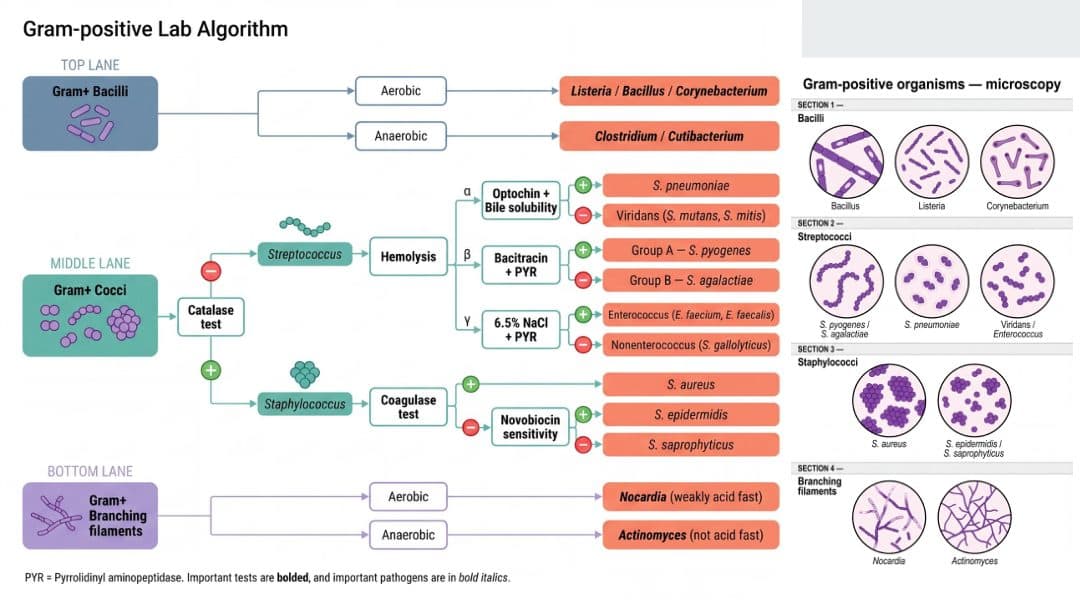
Top lane — gram-positive rods. Next question — does this bug need oxygen? If yes — aerobic — think Listeria, Bacillus, or Corynebacterium. If no — anaerobic — think Clostridium.
Bottom lane — branching filaments.Same logic. Aerobic — that's Nocardia (weakly acid-fast). Anaerobic — that's Actinomyces (not acid-fast at all).
Middle lane — cocci, the round ones. This is the busy lane. First ask the catalase test. Catalase-negative → Streptococcus (chains). Catalase-positive → Staphylococcus (clusters, like grapes).
Streptococcus splits by hemolysis — how it destroys red blood cells on a blood agar plate:
- •Alpha — partial destruction, green zone. Candidates: S. pneumoniae or Viridans. Pneumoniae is killed by optochin and dissolves in bile — Viridans is not.
- •Beta — complete destruction, clear zone. Group A (S. pyogenes: strep throat, rheumatic fever) or Group B (S. agalactiae: neonatal meningitis).
- •Gamma — no destruction. Main culprit: Enterococcus (tolerates salty conditions).
Staphylococcus splits by coagulase. Coagulase-positive — only Staph aureus, the aggressive one. Coagulase-negative — S. epidermidis (skin, prosthetics) or S. saprophyticus (UTI in young women).
That's the entire algorithm. If you can walk through this map confidently, you can identify any gram-positive bug on USMLE in under thirty seconds. Don't memorize names alone — memorize the path you took to get there.
Staphylococcus
Clusters. Catalase-positive. The key test is coagulase.
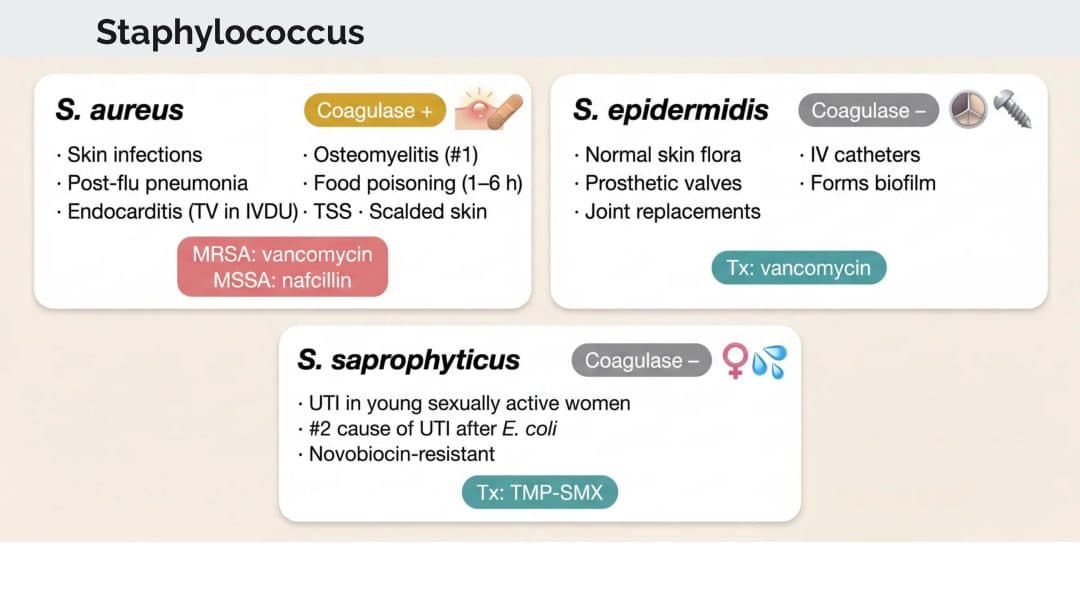
Staph aureus — coagulase-positive. The workhorse of USMLE. Causes a huge list of diseases: skin infections (impetigo, cellulitis, abscesses), pneumonia (especially after the flu, often with lung cavities), endocarditis (classic in IV drug users, attacks the tricuspid valve), osteomyelitis (most common cause overall), food poisoning (vomiting 1–6 hours after eating, no fever — preformed toxin), toxic shock syndrome (high fever, rash, hypotension — tampons, surgical wounds), and scalded skin syndrome in newborns.
Dodges the immune system via protein A, which blocks antibodies. Treatment: MSSA — nafcillin, MRSA — vancomycin.
Staph epidermidis — coagulase-negative, lives on skin, infects prosthetics via biofilm. Treat with vancomycin.
Staph saprophyticus — also coagulase-negative. Causes UTI in young, sexually active women — second most common cause after E. coli. Treat with TMP-SMX.
Streptococcus and Enterococcus
Chains. Catalase-negative.
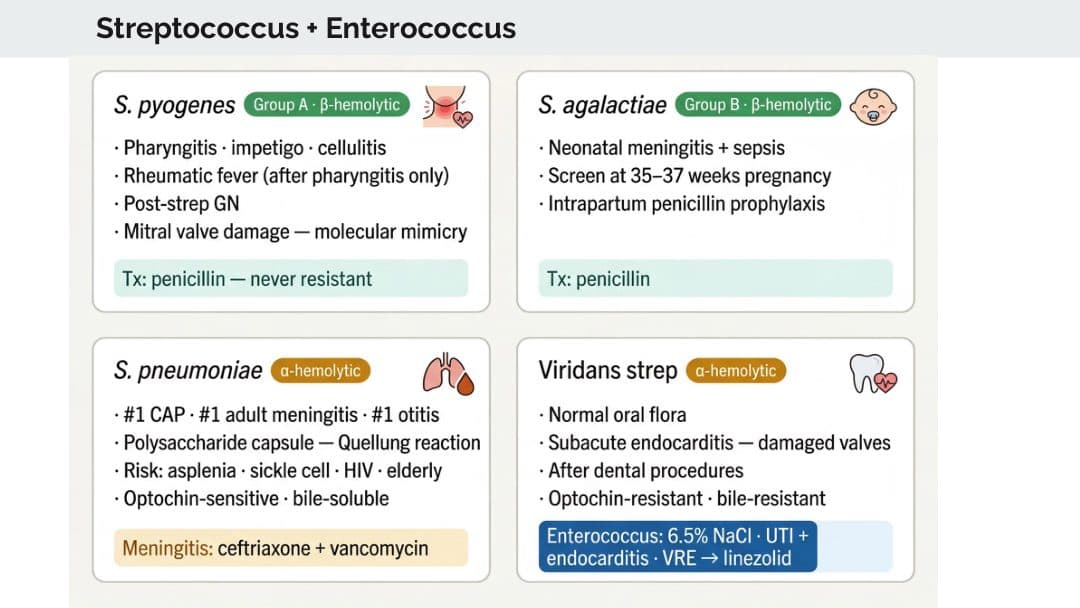
Strep pyogenes (Group A) — strep throat and skin infections. The danger comes after: rheumatic fever (only after strep throat, never after skin infection — damages the heart via molecular mimicry) and post-strep glomerulonephritis (blood in urine, swelling around the eyes, high blood pressure). Treatment — penicillin; Group A has never developed resistance.
Strep agalactiae (Group B) — all about pregnancy and newborns. Most common cause of neonatal meningitis and sepsis, which is why pregnant women are screened at 35–37 weeks.
Strep pneumoniae — alpha-hemolytic, polysaccharide capsule blocks phagocytosis. Number one cause of community-acquired pneumonia, bacterial meningitis in adults, and otitis media in kids. Classic picture — sudden fever, rust-colored sputum, lobar pneumonia. High-risk group — anyone without a working spleen. Treatment — penicillin or ceftriaxone.
Viridans strep — also alpha-hemolytic, lives in the mouth. After dental work can cause subacute endocarditis on already-damaged valves.
Enterococcus — gamma-hemolytic, lives in the gut. Causes UTI, endocarditis, and biliary infections. VRE (vancomycin-resistant) is treated with linezolid.
Spore-Forming Rods
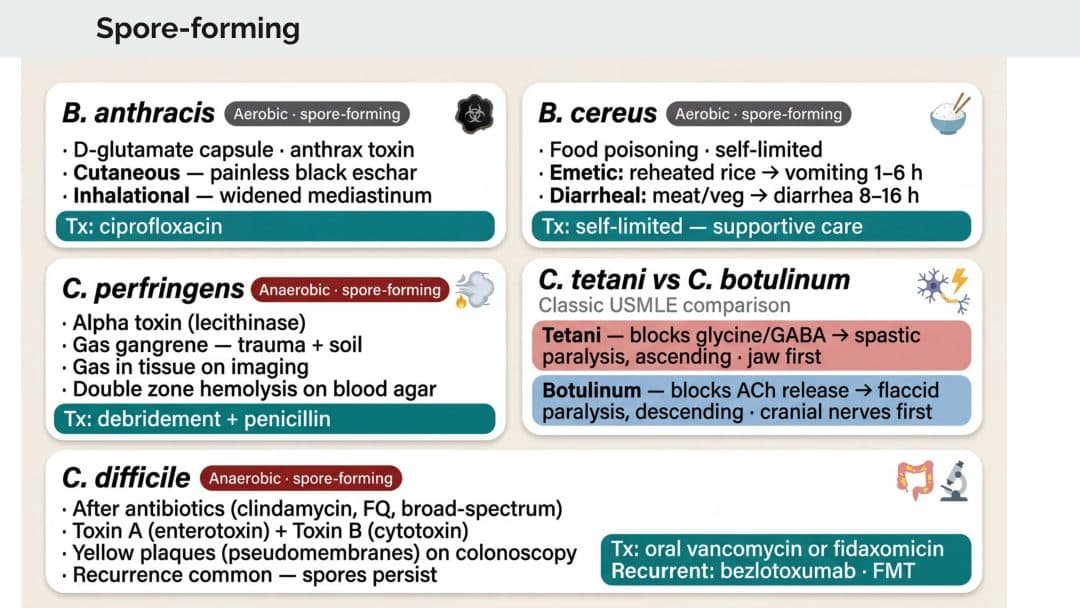
Bacillus and Clostridium make spores — that's how they survive heat, time, and chemicals.
Bacillus anthracis — anthrax. Three forms: cutaneous (painless black eschar, treat with ciprofloxacin), inhalational (the deadly one, widened mediastinum on X-ray), and GI (from contaminated meat).
Bacillus cereus — food poisoning. Reheated rice → vomiting in 1–6 hours; meat/vegetables → diarrhea in 8–16 hours. Self-limited, no antibiotics needed.
Clostridium — anaerobes, four species you must know:
- •C. perfringens — gas gangrene (trauma plus dirt, gas bubbles in muscle on imaging). Treatment — surgery plus penicillin.
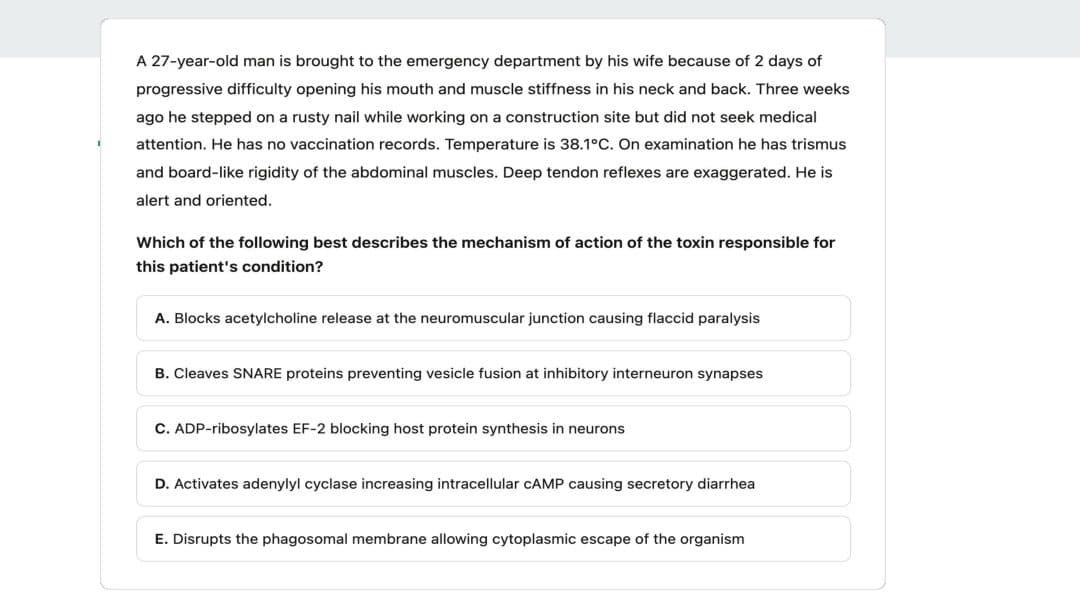
- •C. tetani — tetanus. Toxin blocks inhibitory signals → spastic paralysis, starts with the jaw (trismus). Treatment — immunoglobulin plus penicillin plus benzodiazepines.
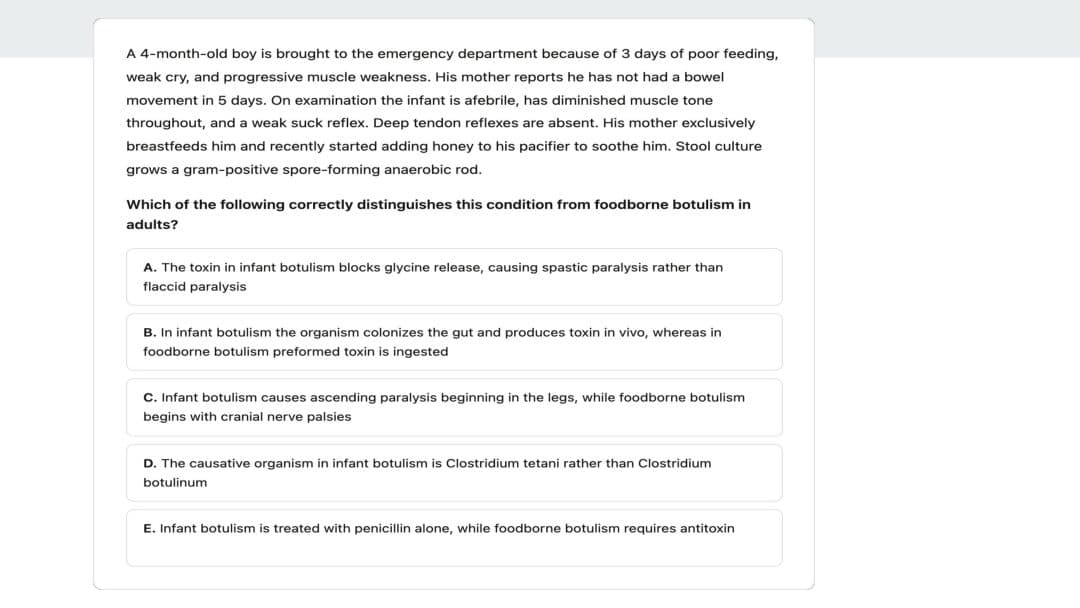
- •C. botulinum — botulism, the opposite of tetanus. Toxin blocks acetylcholine → flaccid paralysis, starts with the face. Forms: foodborne (canned goods), infant (honey, "floppy baby" — classic USMLE), wound. Treatment — antitoxin (BabyBIG for infants).
- •C. difficile — pseudomembranous colitis after antibiotics (especially clindamycin). Treatment — oral vancomycin or fidaxomicin.
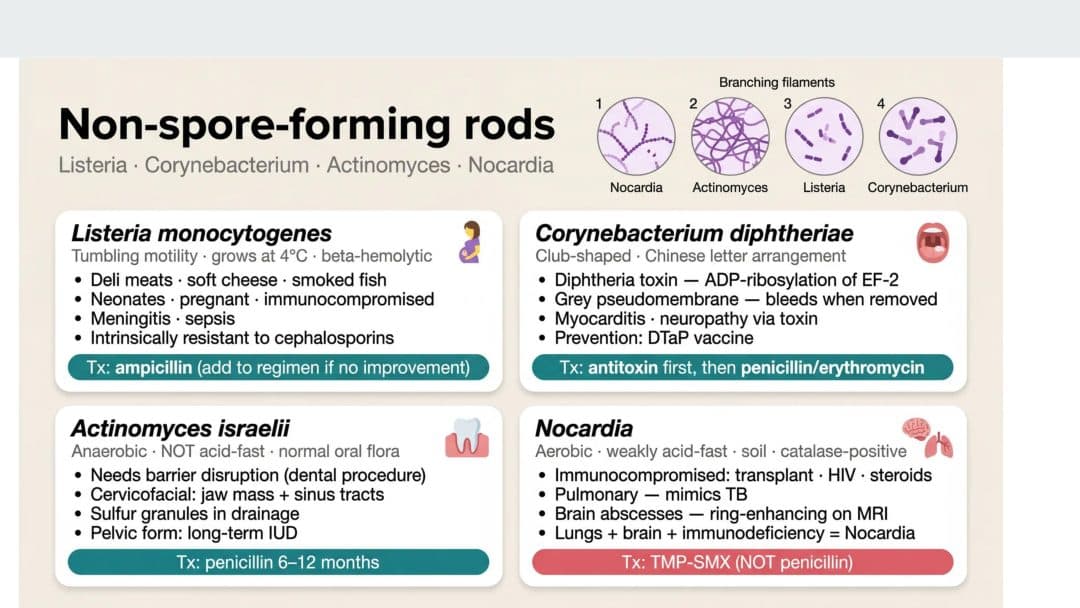
Non-Spore-Forming Rods
Listeria monocytogenes— grows even in the fridge at 4°C (deli meats, soft cheeses, smoked fish). Affects pregnant women, newborns, the elderly, and the immunocompromised. Critical fact — naturally resistant to all cephalosporins, so if ceftriaxone plus vancomycin isn't working, add ampicillin.
Corynebacterium diphtheriae — diphtheria. Toxin shuts down protein synthesis, a thick grey membrane forms in the throat. Treatment — antitoxin first, then penicillin.
Actinomyces israelii— anaerobic filamentous rod, not acid-fast, normal mouth flora. Firm jaw mass with "sulfur granules." Treatment — penicillin for 6–12 months.
Nocardia — aerobic filamentous rod, weakly acid-fast, lives in soil. Affects the immunocompromised, starts in the lungs (looks like TB), spreads to the brain. Treatment — TMP-SMX, not penicillin.
⚡ USMLE Trap
Actinomyces → penicillin. Nocardia → TMP-SMX. Burn that in.
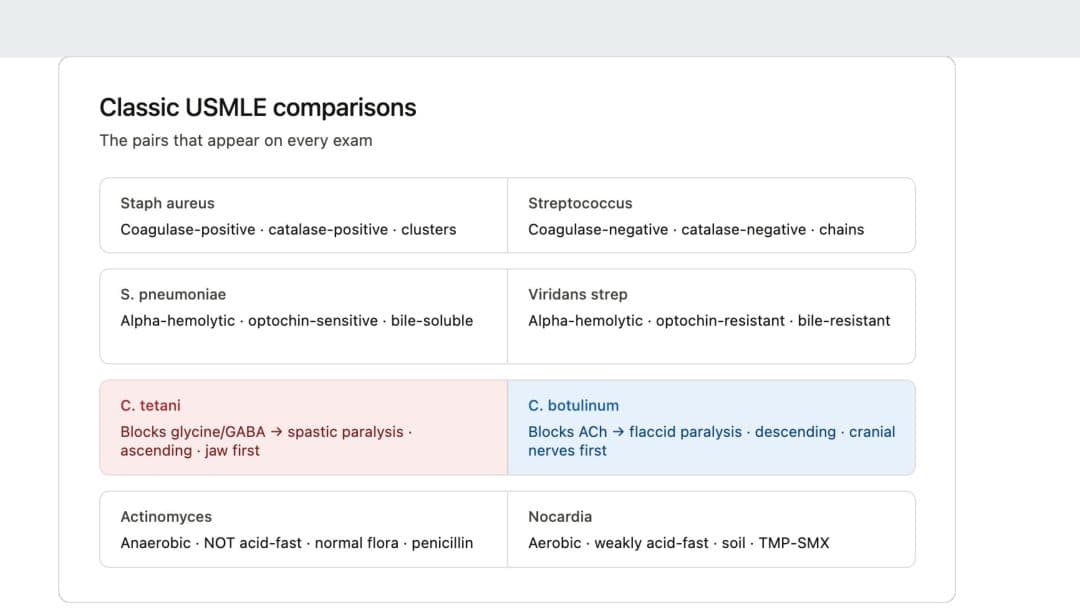
Classic USMLE Comparisons
The pairs the exam loves:
Staph vs Strep
Clusters vs chains. Catalase-positive vs catalase-negative.
Pneumoniae vs Viridans
Both alpha-hemolytic; pneumoniae is killed by optochin and dissolves in bile, Viridans is not.
Actinomyces vs Nocardia
Both branching filaments; Actinomyces anaerobic / not acid-fast / mouth flora / penicillin, Nocardia aerobic / weakly acid-fast / soil / TMP-SMX.
Tetani vs Botulinum
Same genus, opposite effects; tetani — spastic, ascends from the jaw. Botulinum — flaccid, descends from the face.
Clinical Vignettes
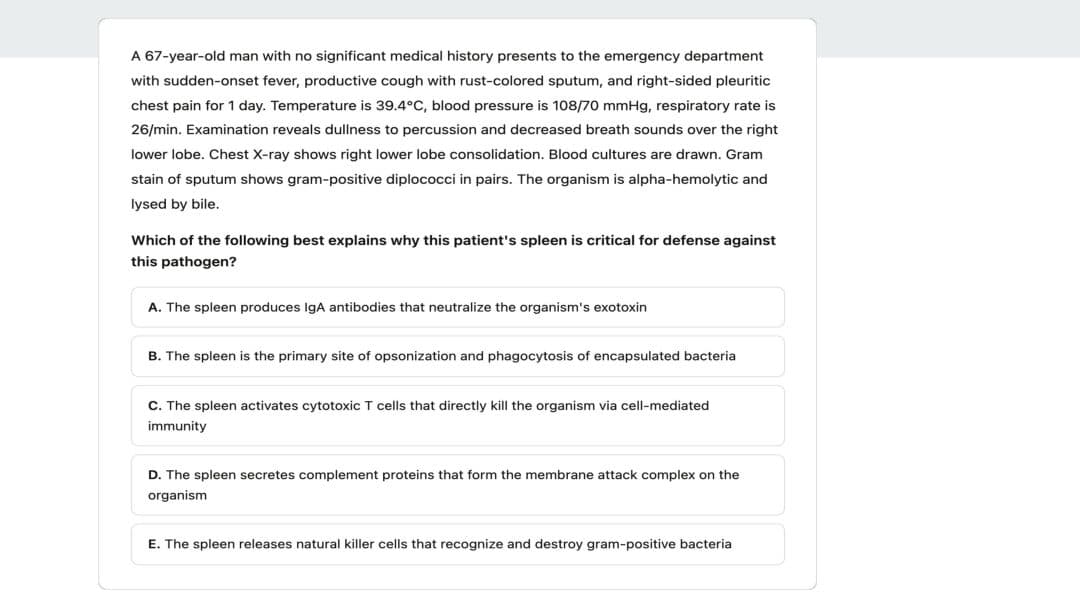
Question 1 — Strep pneumoniae and the spleen.A 67-year-old man, sudden fever, rust-colored sputum, lobar consolidation, gram-positive diplococci in pairs, alpha-hemolytic, lysed by bile. Classic pneumococcal pneumonia. Why is the spleen critical? Because it's the primary site of opsonization and phagocytosis of encapsulated bacteria. Mnemonic SHiN: Strep pneumoniae, Haemophilus influenzae, Neisseria meningitidis — the three organisms critical in asplenic patients.
Question 2 — C. tetani toxin mechanism. A construction worker, rusty nail, trismus, rigidity, hyperreflexia. Tetanospasmin is a zinc-dependent protease that travels retrograde to the spinal cord and cleaves SNARE proteins at inhibitory interneurons, blocking glycine and GABA. Result — uncontrolled muscle contraction, spastic paralysis. (Not to be confused with botulinum toxin, which blocks acetylcholine at the neuromuscular junction, causing flaccid paralysis.)
Question 3 — infant vs foodborne botulism.A 4-month-old, honey on the pacifier, "floppy baby," constipation. In infant botulism the organism colonizes the gut and produces toxin in vivo; in foodborne botulism, preformed toxin is simply ingested. Adult gut flora outcompetes C. botulinum — infant flora is immature.
Question 4 — Nocardia vs Actinomyces, the ultimate trap. An HIV patient, CD4 of 62, cavitary lung lesion plus ring-enhancing brain lesions, gram-positive branching rods, catalase-positive, weakly acid-fast. This is Nocardia (aerobic, soil organism, disseminates to lungs and brain in the immunocompromised) — treatment is TMP-SMX, not penicillin.
Bottom Line
Three things to walk away with today:
- 1The framework. Shape tells you the group: clusters — Staph, chains — Strep. Rods split into spore-formers (Bacillus, Clostridium) and non-spore-formers. Branching filaments — Nocardia or Actinomyces (aerobic/anaerobic, acid-fast or not).
- 2The classic pairs — these are what USMLE tests the most.
- 3The treatment traps — Actinomyces (penicillin) vs Nocardia (TMP-SMX), Listeria (add ampicillin), MRSA (vancomycin), VRE (linezolid), C. difficile (oral vancomycin).
Gram-positive bacteria are one of the highest-yield topics on USMLE Step 1 and Step 2. If you understand the logic — not just memorize the names — you can answer almost any question about them.